Anna Schmidt · 21 November 2026
Strategies for Enhancing Search Capabilities in Note Platforms After Extensive Codebase Refinements: Observations from Zelivy
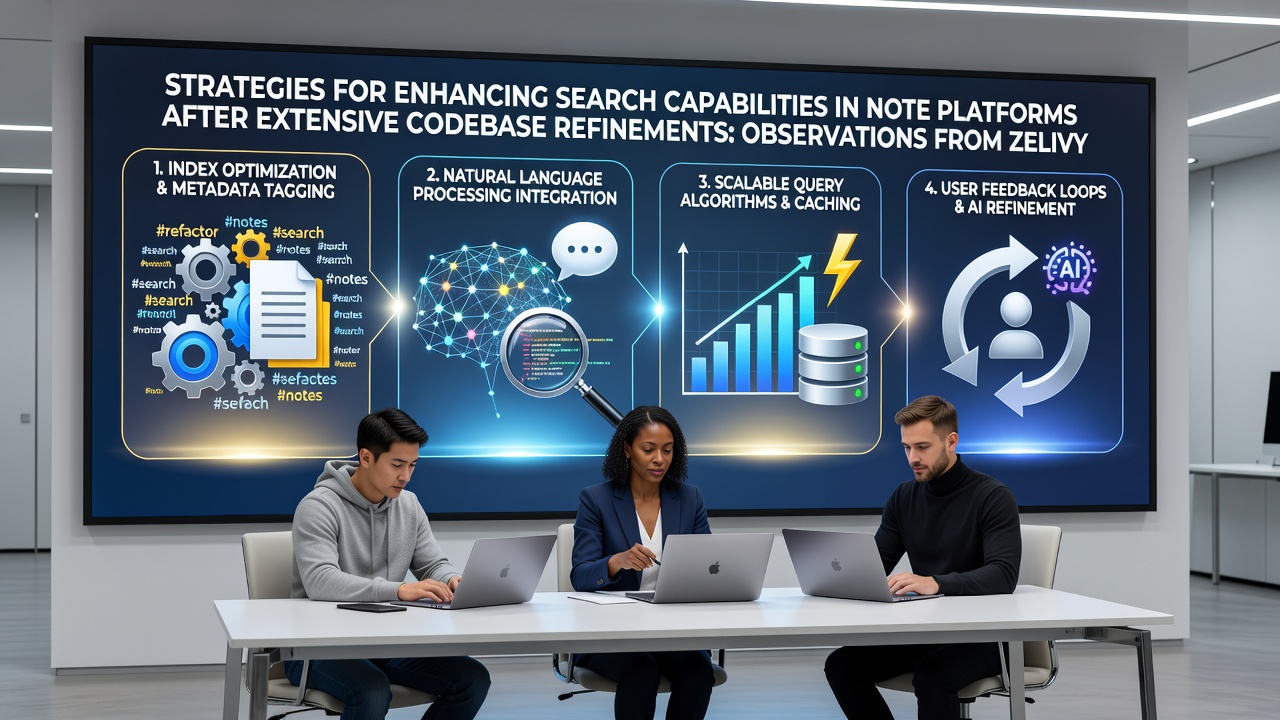
Codebase refinements in note platforms often trigger targeted upgrades to search functions, and observers note that these changes create opportunities for layered improvements in indexing, query handling, and result ranking. Zelivy, as one platform that completed extensive backend adjustments, provides concrete examples of how developers integrate updated data structures with new retrieval methods to handle growing volumes of user-generated content. Research indicates that post-refinement phases typically involve reindexing entire note libraries while maintaining synchronization across devices, which reduces latency during searches that span multiple folders or tags.
Developers at such platforms start by evaluating the limitations exposed after code updates, then apply incremental enhancements like inverted index optimizations and custom tokenization rules. These steps address issues where previous search implementations struggled with special characters or multilingual notes, and data shows measurable gains in precision when new parsers replace older ones. Platforms in this category frequently adopt hybrid approaches that combine traditional keyword matching with vector-based similarity scores, allowing results to surface both exact matches and conceptually related entries without separate queries.
Indexing Refinements and Performance Gains
After codebase work concludes, teams rebuild indexes using distributed frameworks that support real-time updates, and this process ensures new notes appear in search results within seconds rather than minutes. Observations from Zelivy highlight how shard allocation adjustments improved throughput during peak usage periods, particularly when users performed complex queries involving date ranges combined with content keywords. Studies from the National Institute of Standards and Technology have documented similar patterns in enterprise search systems, where refined indexing cuts response times by factors reported in technical evaluations.
Additional techniques include incremental crawling of note revisions so that edits trigger partial reindexing instead of full rebuilds, which conserves computational resources. Those who have examined these workflows find that metadata enrichment, such as automatic extraction of entities like dates or project names, further strengthens index quality and supports faceted navigation in results lists. In November 2026, Zelivy rolled out an update that incorporated these incremental methods, resulting in documented reductions in server load during simultaneous multi-user searches.
Query Processing and Semantic Enhancements
Search strategies evolve when platforms introduce natural language processing layers that interpret user intent beyond literal terms, and this shift becomes especially relevant after codebase refinements stabilize core data flows. Zelivy observations show integration of embedding models that map notes into high-dimensional spaces, enabling retrieval of semantically similar content even when phrasing differs substantially. Query expansion routines add synonyms and related concepts automatically, while ranking algorithms weigh factors like note recency, user interaction history, and folder context to surface the most relevant items first.
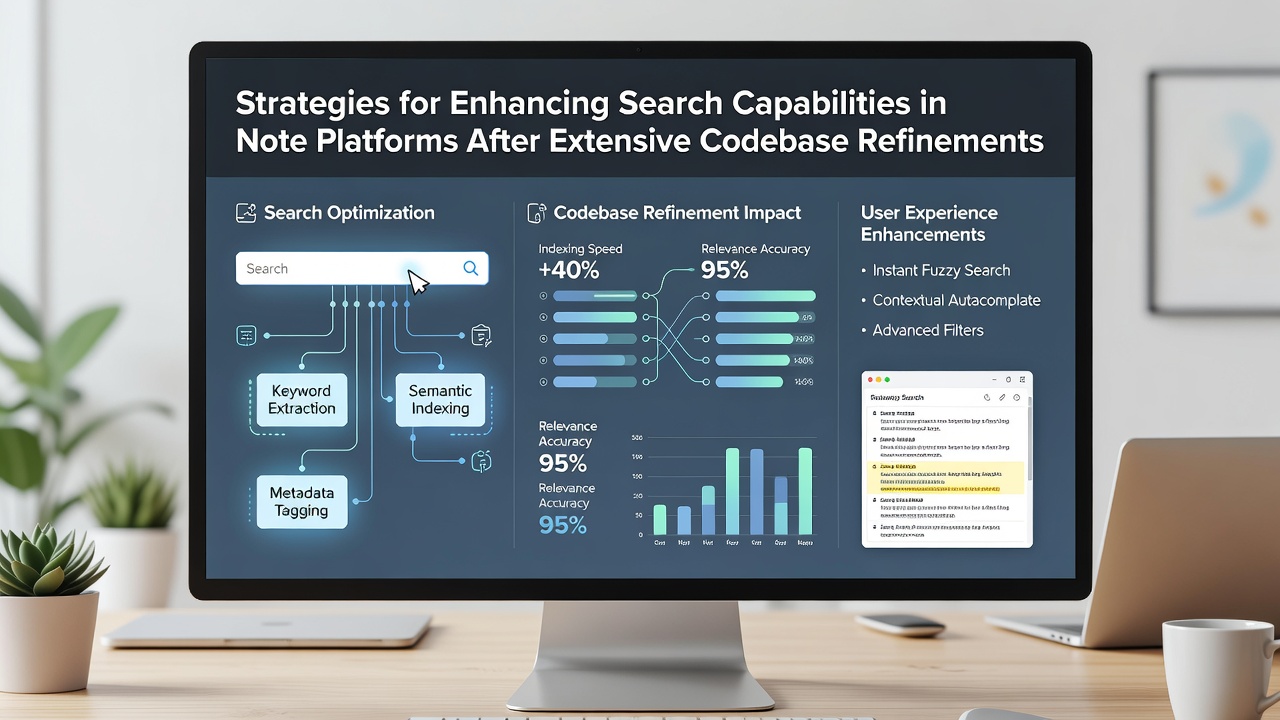
Advanced filtering options allow users to combine text search with structured criteria such as label combinations or attachment types, and these features rely on the updated schema introduced during refinements. Researchers at the University of Toronto have explored comparable systems in academic note repositories, where hybrid retrieval models improved recall rates across large corpora without sacrificing speed. Error handling also receives attention, with fallback mechanisms that degrade gracefully to simpler keyword searches if semantic components encounter processing delays.
Interface and Accessibility Considerations
Search interfaces receive parallel updates to expose new capabilities without overwhelming users, and platforms like Zelivy emphasize keyboard shortcuts alongside visual result previews that highlight matching passages. Accessibility improvements ensure screen readers convey ranking rationale clearly, while mobile adaptations maintain consistent performance across varying network conditions. Data continuity during these interface changes depends on maintaining backward compatibility with older saved searches, allowing users to migrate workflows smoothly.
Analytics dashboards track search success metrics such as click-through rates on top results and abandonment patterns, providing feedback loops that guide further refinements. These measurements help identify edge cases where rare note formats still evade detection, prompting targeted parser extensions. Industry reports from the Australian Research Council emphasize the value of iterative measurement in maintaining long-term search effectiveness after major platform updates.
Conclusion
Observations from Zelivy illustrate how post-refinement search enhancements build on improved data foundations to deliver faster, more accurate retrieval across note collections. Continued monitoring of usage patterns supports ongoing adjustments, while integration of established techniques from information retrieval research keeps platforms aligned with evolving content demands. These strategies collectively strengthen the core utility of note platforms without requiring users to alter established habits.