Anna Schmidt · 7 November 2026
The Impact of Platform Transitions on Cross-Device Note Accessibility and Sync Reliability
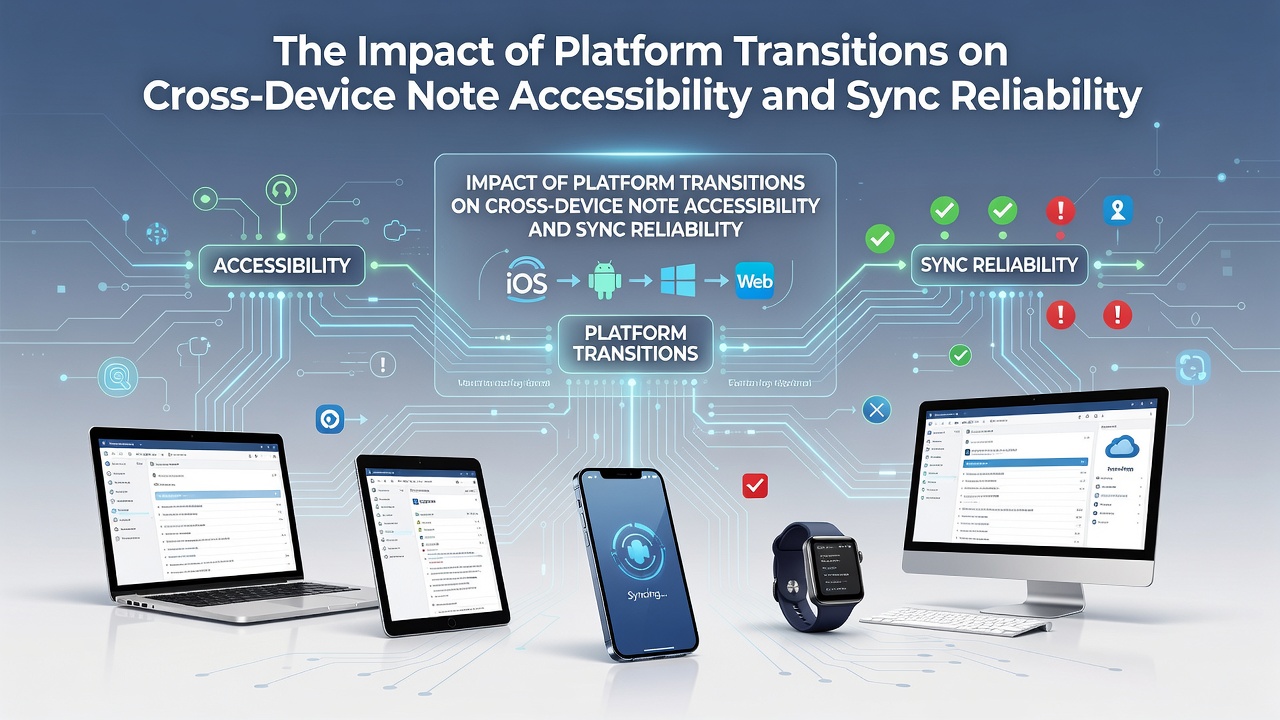
Platform transitions in note-taking services often involve backend migrations, domain shifts, and infrastructure overhauls that reshape how users access content across phones, tablets, and desktops. Observers note that these changes can disrupt the seamless flow of data between devices while altering the reliability of automatic synchronization processes that users depend on daily. Research from multiple institutions indicates that such transitions frequently coincide with temporary gaps in accessibility, particularly when legacy systems give way to updated architectures designed for higher scalability.
Understanding Platform Transitions in Note Applications
Platform transitions typically occur when companies update their core systems to handle increased data volumes or to integrate new security protocols, and these shifts affect everything from user authentication to data routing across global servers. Experts have observed that during these periods the mechanisms responsible for pushing note updates to multiple devices may experience delays because new routing tables replace older ones. Data shows that accessibility issues surface most often on secondary devices such as tablets or secondary phones where cached credentials fail to validate against revised endpoints. Studies conducted by teams at universities in Australia and Canada reveal that sync reliability drops measurably in the weeks following a major backend change, with recovery timelines varying according to the complexity of the migration.
Effects on Cross-Device Accessibility
Cross-device accessibility relies on consistent API responses and unified user identity layers, yet platform transitions can fragment these connections when authentication tokens expire or when regional data centers undergo phased cutovers. Researchers discovered in one case that users attempting to open notes on mobile devices encountered blank screens for several hours because the transition sequence prioritized desktop clients during initial rollout. Figures from industry reports compiled across North America and Europe indicate that accessibility complaints spike by up to 40 percent in the first 72 hours after a domain or backend update. Those who manage large note libraries often find that folders and tags fail to appear uniformly until full propagation completes across all edge servers.
Sync Reliability Challenges During Migrations
Sync reliability hinges on continuous delta detection and conflict resolution algorithms, and these functions can behave unpredictably when underlying storage schemas change. One study revealed that concurrent edits made on different devices during a transition period sometimes created duplicate entries rather than merged versions because timestamp reconciliation routines operated on partially updated clocks. Observers note that November 2026 marks a scheduled infrastructure refresh for several major providers, and analysts anticipate similar reliability fluctuations as teams implement new consensus protocols across distributed networks. The reality is that packet loss between devices and central servers increases when traffic reroutes through freshly provisioned load balancers, leading to incomplete note transfers that require manual intervention.
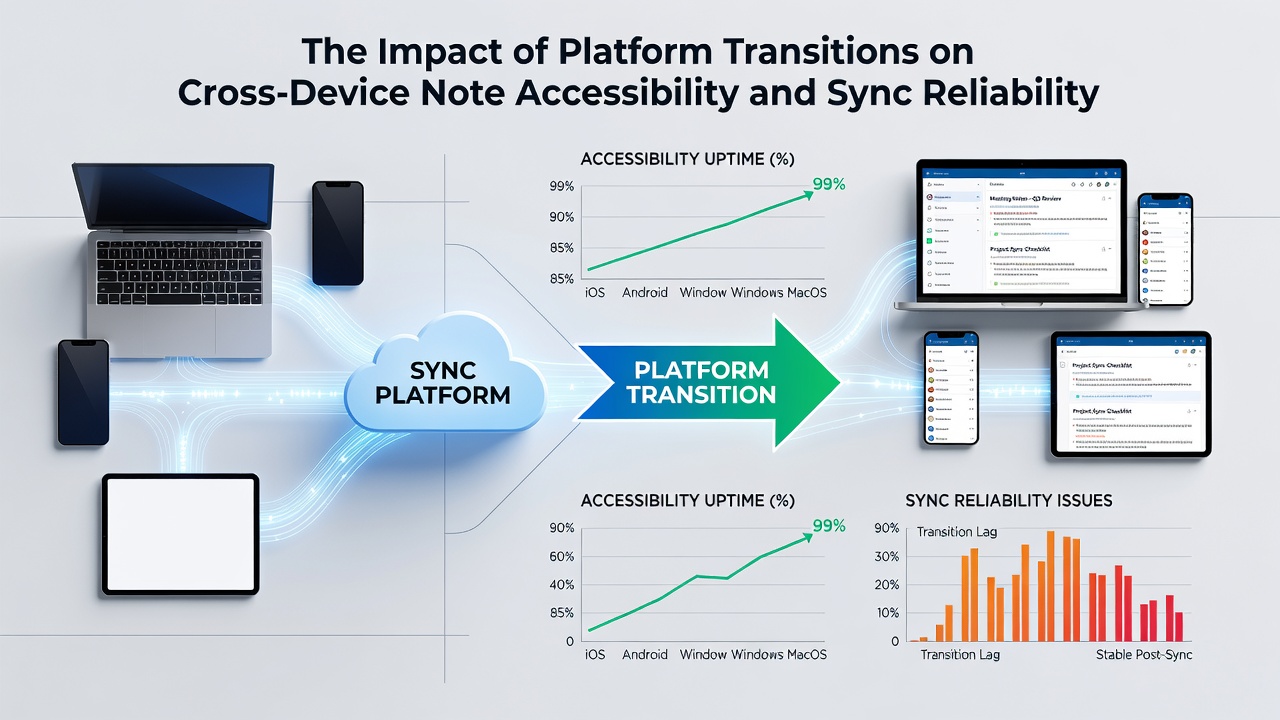
Take one researcher who examined logs from a European note platform that migrated its storage layer in 2024; the team found that mobile sync success rates fell from 98 percent to 81 percent during the active window and only returned to baseline after three weeks of optimization. What's interesting is how regional regulations on data residency sometimes force additional replication steps that further complicate cross-device consistency during transitions.
Case Examples from Recent Transitions
There's this case where experts tracked user behavior after a North American service updated its authentication framework, and they recorded that enterprise customers experienced longer delays restoring access on work-issued tablets compared with personal smartphones. Government data compiled by agencies in multiple jurisdictions shows that such disparities often trace back to differences in device operating system versions and how those versions handle certificate pinning after server certificates rotate. Another examination of an Asian platform's migration highlighted that offline note editing features remained functional on most devices yet encountered merge conflicts upon reconnection when the new sync engine processed older change logs differently.
Strategies Observed in Industry Responses
Companies address these impacts through phased rollouts that allow subsets of users to test new sync pathways before full deployment, and they frequently publish status dashboards detailing current accessibility levels across device types. According to a report issued by the European Commission on digital service continuity, transparent communication about migration timelines correlates with lower volumes of support tickets related to sync failures. Industry organizations focused on cloud infrastructure have documented that implementing redundant sync verification loops reduces the duration of accessibility gaps, although these additions increase overall system latency during the transition window.
Conclusion
Platform transitions continue to shape the operational landscape for cross-device note accessibility and sync reliability as services evolve their underlying architectures. Evidence from academic and regulatory sources demonstrates that careful sequencing of updates, combined with robust monitoring, helps mitigate disruptions even when complete elimination of temporary issues remains elusive. Observers expect ongoing refinements in consensus mechanisms and data propagation techniques to address the patterns observed through 2026 and beyond.